May 28, 2026 • Maren Solvik • 9 min reading time • Specs verified June 11, 2026
Seed Storage and Organization Before Sowing Season: Setting Up So Your Seeder Actually Gets Used
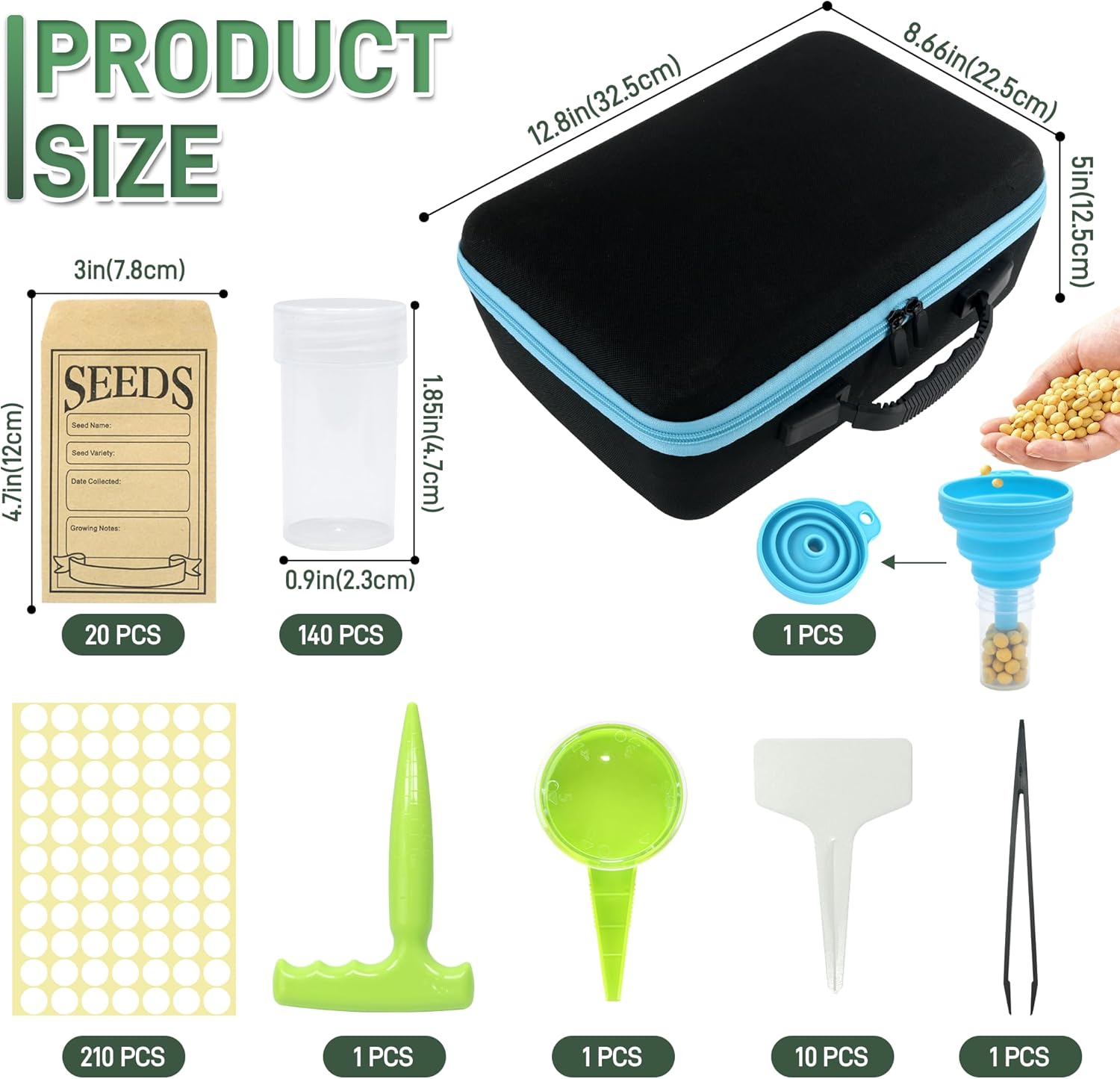
There’s a moment most precision seeder owners recognize, usually around the first warm weekend in March: you pull the Jang JP-1 or the Earthway 1001-B out of the shed, you’re ready to plant two hundred feet of brassicas, and then you spend forty-five minutes hunting for the right seed packet, second-guessing whether last year’s carrots are still viable (viable means capable of germinating — producing a healthy seedling), and trying to remember which JP-1 roller — the small ribbed cylinder that meters seeds one at a time into the furrow — you set aside for Scarlet Nantes versus Bolero. The seeder isn’t the bottleneck. Your seed system is.
This article is about fixing that. We’ll walk through how to store seeds so they stay viable as long as possible, how to organize your collection so you can load a seeder in under five minutes, and how to pre-match seeds to seeder hardware before the season starts — so that when planting day comes, you’re moving, not excavating.
Why Storage Conditions Actually Matter for Seeder Users Specifically
Most gardeners have heard the general advice: keep seeds cool and dry. But for anyone running a precision seeder, the stakes are higher than for someone hand-dropping transplants. When you’re spacing carrots at two-inch intervals across a 200-foot bed using a roller-driven seeder, even a 15–20% drop in germination rate (the percentage of seeds that successfully sprout) means visible gaps in your stand — gaps you’ll either replant or write off as lost bed-space and revenue.
The University of California Cooperative Extension’s stored seed viability factsheet puts it plainly: for every 1% increase in relative humidity above the storage threshold, and for every 10°F rise in storage temperature, seed longevity roughly halves. For carrot seed — already one of the shorter-lived varieties at two to three years under ideal conditions — poor storage can drop germination below 55% in a single off-season. At that rate, the pelleted seed you paid $28 per thousand for is delivering maybe $15 in actual plant starts.
The 32° Rule of Thumb: Seed scientists sometimes reference a rule that the sum of the storage temperature (in °F) and the relative humidity percentage should stay below 100 for safe long-term storage. A cool basement at 50°F and 45% RH (relative humidity) scores 95 — fine. A kitchen counter at 72°F and 60% RH scores 132 — actively damaging. Johnny’s Selected Seeds’ seed storage recommendations page confirms this framework and recommends airtight containers with desiccant packets (small sachets of silica gel that absorb moisture) as the practical home solution.
The practical takeaway: get seeds into sealed containers with desiccant, in the coolest stable location you have, before you think about anything else. A dedicated dorm-style refrigerator running at 38–40°F is the gold standard for serious growers. A cool basement or unheated mudroom works well for most home gardeners.
The Pre-Season Audit: Know What You Have Before You Buy More
The biggest source of seed waste in any organized growing operation isn’t poor storage — it’s duplicate purchasing. You buy beet seeds in February because you couldn’t find last year’s packet, then discover two partial envelopes in April. Multiply that across forty varieties and you’ve spent $60–$90 on redundant inventory.
A pre-season audit takes about ninety minutes once, then about twenty minutes annually if you maintain the system.
Run the audit in three passes:
Pass 1 — Inventory everything. Pull every seed packet, envelope, and bulk container you own. Group by crop family: brassicas together, alliums together, roots together, legumes together, cucurbits together. Don’t sort by variety yet — just family. This gives you a visual grasp of where you’re over-stocked and where you’re thin.
Pass 2 — Date and viability-check. For each packet, note the pack date or “sow by” date. Cross-reference against a standard viability chart (the Rodale Institute’s seed saving and storage guide includes a reliable one, as does the ATTRA seed saving publication from NCAT). Flag anything at or past its expected lifespan for a germination test: place ten seeds on a damp paper towel in a sealed bag at room temperature for the crop’s standard germination period. If fewer than seven sprout (70%), plan to oversow or replace. If fewer than five sprout (50%), replace before relying on that seed in a precision seeder — low-germination seed in a roller seeder produces exactly the gap-riddled stand you bought the machine to avoid.
Pass 3 — Match to your seeder hardware. This is the step most home growers skip, and it’s the one that makes planting day smooth. For each seed variety you plan to sow with a precision tool, write down or tag which plate, roller, or brush gap setting it uses. We’ll cover the matching logic in the next section.
Matching Seeds to Hardware Before the Season Starts
A precision seeder — whether a simple dial dispenser like those from Lee Valley Tools, a belt-driven Jang JP-1, or a vacuum drum seeder — works by metering seeds of a specific size range through a calibrated gap or cell. When the seed size is wrong for the setting, you get skips (empty spaces where no seed dropped) or doubles (two seeds in the same spot, which creates crowding and wasted thinning labor).
By the numbers — common seed size ranges and seeder hardware:
| Crop | Approx. seed diameter | Jang JP-1 roller | Earthway plate |
|---|---|---|---|
| Carrot (raw) | 1.0–1.5 mm | YYJ-12 or XYJ-12 | Standard root/herb plate |
| Beet (raw) | 3.0–4.5 mm | LJJ-12 or OJJ-8 | Large seed plate |
| Lettuce (raw) | 0.9–1.2 mm | YYJ-24 | Small seed plate |
| Radish | 2.5–3.5 mm | LJJ-12 | Large seed plate |
Sources: Johnny’s Selected Seeds roller/plate matching guide; Earthway 1001-B plate reference chart.
The critical insight here is that pelleted seed — seed coated in clay or other material to bring it to a uniform, larger diameter, typically 3–4 mm — often requires a different setting than the same variety sold as raw (uncoated) seed. If you’re purchasing both pelleted and raw versions of the same crop (common for lettuce and carrots), they need to be stored and staged separately with hardware notes attached.
The practical system that market gardeners describe in Growing for Market reviews of planting workflow: keep a small index card or laminated slip inside each seed storage container noting the crop, variety, pack date, germination test result if run, and the seeder hardware setting. When you pull the container in the field, everything you need is right there. No cross-referencing manuals at the end of a bed.
A Storage and Staging System That Actually Holds Up Through the Season
There’s a difference between organizing seeds at the start of the year and staying organized through ten weeks of successive plantings. Here’s a tiered approach based on how seeds are documented across market-garden planning resources:
Tier 1 — Long-term archive (multi-season seeds you won’t touch this year). Sealed glass jars with desiccant, labeled with crop, variety, source, and pack year. Stored in a cool, dark, stable-temperature location — a refrigerator is ideal; a root cellar or cool basement is acceptable. These are your genetic reserves and your buffer against a crop failure. The ATTRA seed saving publication recommends keeping a minimum two-year supply of any critical crop variety in long-term storage.
Tier 2 — Active season stock (everything you’ll plant this year). These come out of long-term storage and into a dedicated, portable container — a handled plastic bin or a seed-envelope accordion file organized by planting sequence, not alphabetically. Organize by when you’ll plant: brassicas first, then roots, then warm-season crops. This mirrors the physical sequence of your planting calendar and means you’re always working from the front of the file, not hunting.
Tier 3 — Pre-loaded seeder stage. This is where seeder users gain real time. In the week before a planting session, pull the seeds for that session’s crops, confirm hardware settings, and place each packet or container into a small labeled tray or ziplock with the roller/plate note attached. When you walk out to the garden, you carry the tray — seeds and hardware notes together — and load the seeder in under five minutes.
For market-garden operations running multiple seeder passes per week, some CSA farmers describe a simple pegboard system in the potting shed: hooks labeled by crop family, hardware sets (rollers, plates, brushes) hanging directly below the seed storage for that family. The physical pairing of seed and hardware eliminates the “which roller was that?” search at the start of every planting window.
The Break-Even Case for Getting This Right
It’s easy to treat seed organization as an administrative chore rather than an economic decision. Here’s why it isn’t:
A 50-gram packet of raw carrot seed from a quality supplier runs roughly $12–$18 in 2026 pricing. At 800–1,000 seeds per gram, that’s 40,000–50,000 seeds. If poor storage drops your germination from 75% to 50% — a realistic outcome for carrot seed stored at room temperature through a humid summer — you’ve effectively lost 10,000–15,000 viable seeds. At typical market-garden spacing, that’s 80–120 feet of bed-space unplanted from a packet you already paid for.
For pelleted seed, the math is sharper. Pelleted lettuce or carrot seed typically runs $30–$60 per 1,000 seeds for premium varieties. A single packet of 500 pelleted seeds stored improperly and dropping below 60% germination represents $12–$18 of direct waste — before accounting for the bed space, the seeder time, and the succession planting you’ll need to run to cover the gap.
The desiccant, sealed containers, and twenty minutes of labeling that prevent this cost less than $15 in materials.
If X, Then Y: Decision Rules for Your Setup
The question isn’t whether to build a seed storage and staging system — it’s how elaborate that system needs to be given your scale and tools.
If you’re running one or two precision seeders across a home garden or small raised-bed plot: A single handled plastic bin with dividers, one packet of desiccant sachets refreshed annually, and a laminated hardware-note card per crop is enough. The refrigerator shelf is worth it if you grow carrots, onions, or parsnips — all short-lived seeds.
If you’re operating a market garden or CSA with multiple planting passes per week: The pegboard or tray-staging system pays back immediately in reduced setup time. Treat hardware matching as part of your crop-planning process in January, not a field decision in April. Johnny’s Selected Seeds’ crop planning resources and the Jang roller chart are your reference documents — use them during planning, not during planting.
If you’re holding seed varieties across multiple years: Run germination tests on anything older than half its listed viability lifespan before you count on it in a seeder pass. A fifteen-minute test in February is cheaper than replanting a bed in May.
The seeder sitting unused in the shed is almost never a seeder problem. It’s a friction problem — the small, accumulated hassles of not knowing what you have, where it is, or what setting it needs. Remove the friction in the off-season, and the tool becomes the easy choice it was designed to be.